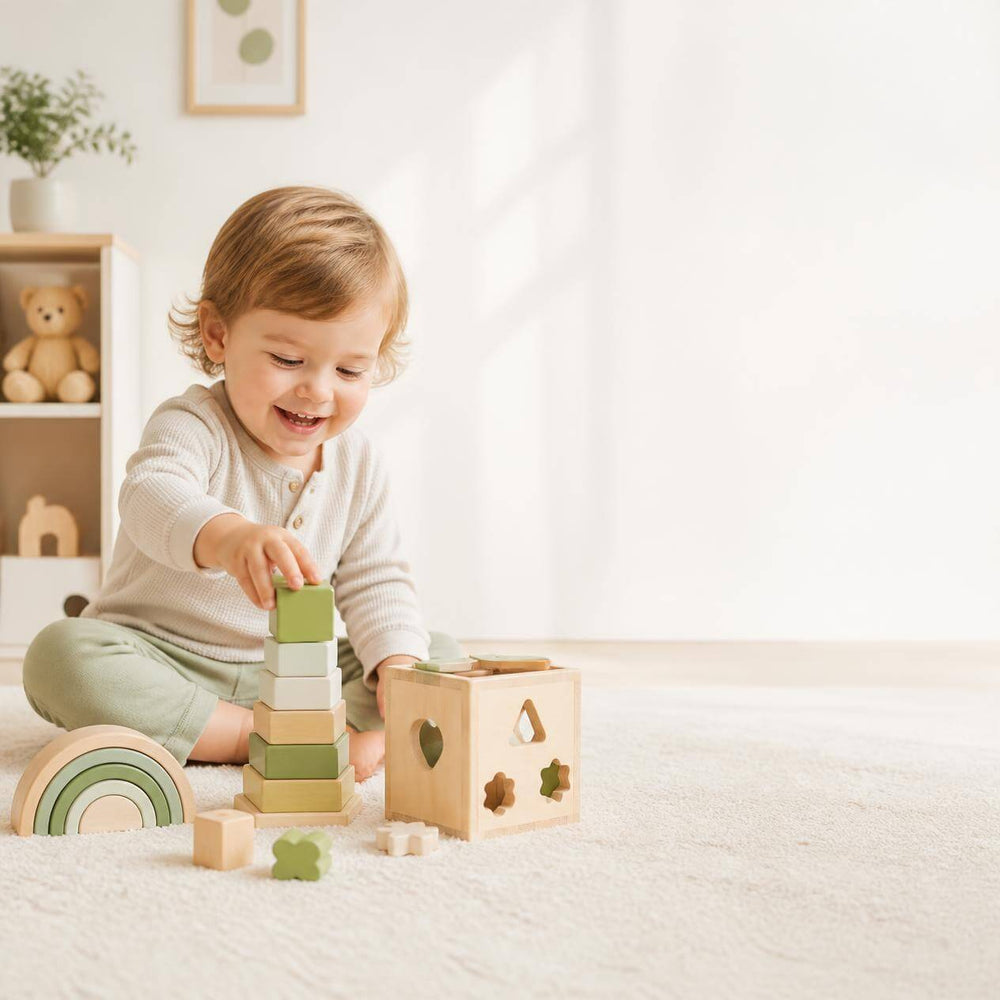

How Educational Toys Support Child Development
Discover how educational toys help children develop problem-solving skills, creativity, communication, confidence, and fine motor skills through play. Explore TeddyMinds' collection of educational and developmental toys designed to inspire learning every day.

As parents, we all want to give our children the best possible start in life. One of the simplest and most effective ways to encourage healthy growth is through play. Educational toys are much more than fun distractions—they help children build essential life skills while enjoying every moment of learning.
At TeddyMinds, we carefully select educational toys that inspire curiosity, creativity, and independent thinking. The right toy can become a powerful learning tool that supports your child's development every single day.
What Are Educational Toys?
Educational toys are designed to encourage children to learn naturally through hands-on play. Instead of passive entertainment, they promote exploration, experimentation, and problem-solving.
Whether it's a wooden puzzle, stacking blocks, sensory toy, construction set, or pretend play kit, each activity helps children develop new skills while having fun.
1. Improve Problem-Solving Skills
Every challenge a child solves strengthens their brain.
Building towers, completing puzzles, sorting shapes, or finding solutions during imaginative play teaches children how to:
- Think critically
- Analyze situations
- Make decisions
- Learn from mistakes
- Stay patient while solving challenges
These early problem-solving experiences build confidence that benefits children throughout school and everyday life.
2. Encourage Creativity and Imagination
Open-ended educational toys have no single "correct" way to play.
Children can invent stories, build new creations, and explore different ideas using their imagination.
Creative play helps develop:
- Imaginative thinking
- Storytelling skills
- Innovation
- Emotional expression
- Independent thinking
When children create their own games and adventures, they become active learners instead of passive observers.
3. Support Language and Communication
Many educational toys naturally encourage conversation.
Pretend kitchens, doctor kits, animal figures, building sets, and board games inspire children to ask questions, explain ideas, and work together.
These activities strengthen:
- Vocabulary
- Listening skills
- Speaking confidence
- Social interaction
- Communication abilities
Playing together also creates meaningful moments between parents and children.
4. Develop Fine Motor Skills
Small hands need practice to become strong and coordinated.
Educational toys help children improve:
- Hand-eye coordination
- Finger strength
- Grip control
- Precision
- Dexterity
Activities like stacking blocks, threading beads, fitting puzzle pieces, and drawing prepare children for important everyday tasks such as writing, dressing, and using utensils.
5. Build Confidence Through Success
Every small achievement matters.
When children successfully finish a puzzle, build a tower, or complete a challenge, they experience a sense of accomplishment.
This helps them develop:
- Self-confidence
- Independence
- Perseverance
- Motivation
- A positive attitude toward learning
Rather than fearing mistakes, children begin to see challenges as exciting opportunities to grow.
6. Encourage Social and Emotional Development
Educational toys are also excellent tools for teaching emotional intelligence.
Playing with siblings, friends, or parents helps children learn to:
- Share
- Cooperate
- Take turns
- Understand emotions
- Show empathy
- Resolve conflicts
These social skills are just as important as academic learning and help children build strong relationships throughout life.
7. Make Learning Enjoyable
Children learn best when they're having fun.
Educational toys transform learning into an exciting adventure rather than a task. Whether they're discovering colors, numbers, letters, shapes, or scientific concepts, children remain engaged because they're actively participating.
This creates a lifelong love of learning that continues well beyond early childhood.
Choosing the Right Educational Toys
Every child develops at their own pace, so choosing age-appropriate toys is important.
Look for toys that:
- Match your child's developmental stage
- Encourage open-ended play
- Inspire creativity
- Promote problem-solving
- Are safe, durable, and made from quality materials
At TeddyMinds, we believe the best educational toys grow with your child and encourage learning through curiosity rather than pressure.
Why Parents Choose TeddyMinds
At TeddyMinds, our mission is simple: to help children learn through joyful play.
We carefully select educational toys that support healthy child development while making playtime exciting and meaningful. From Montessori-inspired activities to sensory toys, puzzles, wooden toys, and creative learning games, every product is chosen to encourage confidence, imagination, and skill development.
When children enjoy learning, they naturally become more curious, creative, and independent.
Final Thoughts
Educational toys do much more than keep children entertained. They help develop problem-solving abilities, creativity, communication skills, emotional intelligence, fine motor skills, and self-confidence—all through the power of play.
By choosing thoughtful learning toys, parents create opportunities for children to explore, discover, and grow every day.
Explore the TeddyMinds collection and find educational toys that inspire curiosity, creativity, and lifelong learning—because every playtime is an opportunity to help your child reach their full potential.
